

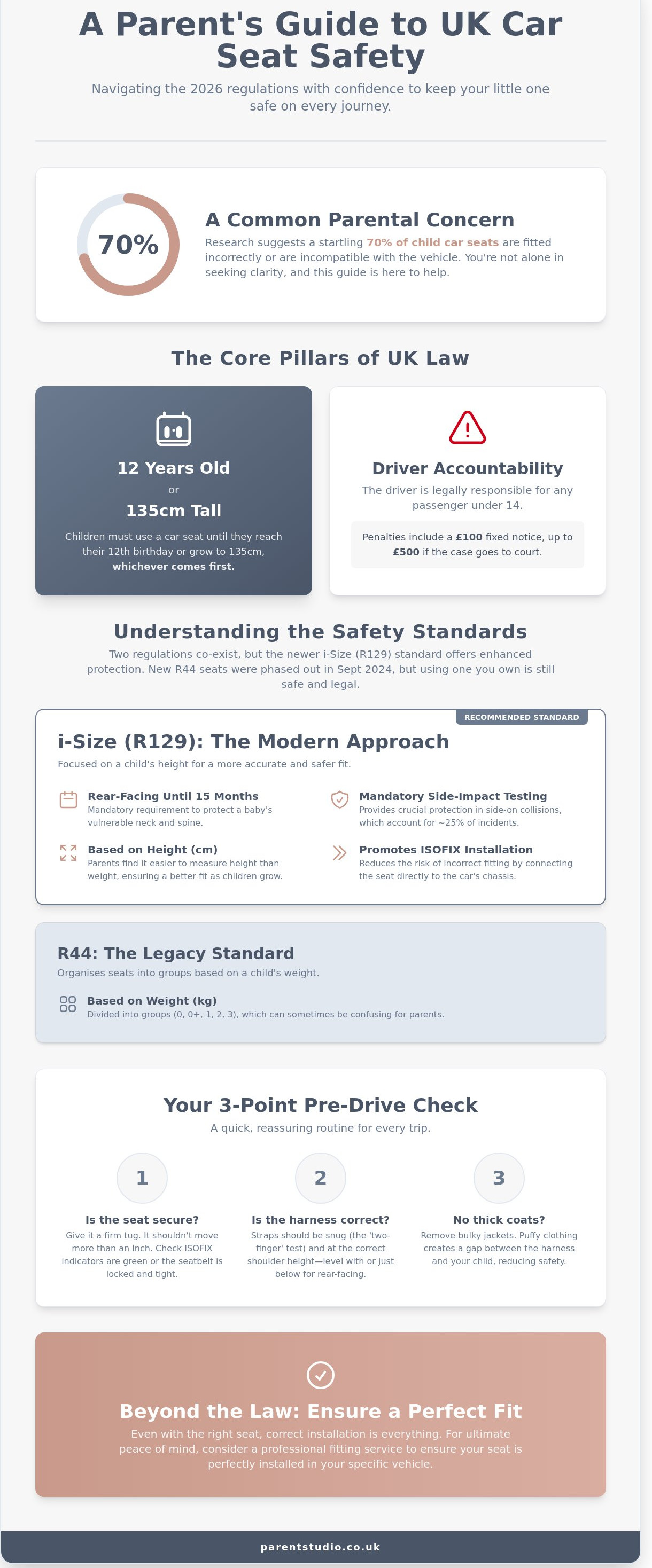
Research from Good Egg Safety suggests that 70% of car seats are fitted incorrectly or are incompatible with the vehicle, a statistic that can feel heavy for any parent simply trying to do their best. It is completely natural to feel overwhelmed by the technical jargon surrounding car seat safety laws, especially when terms like i-Size and R129 seem to change just as you have settled into a routine. You want your child to be cradled in safety, yet the fear of making a mistake during installation or moving them to the next stage too soon can often weigh on your heart.
We understand that you are looking for clarity rather than more noise. This guide will help you understand the 2026 UK regulations with total confidence, ensuring your little one is protected by the highest safety standards available today. We will walk through the transition from R44 to R129, explain exactly when to move to a larger seat, and provide the gentle reassurance you need for every journey together.
Key Takeaways
-
Discover the gentle milestones of the "12 years or 135cm" rule, helping you transition your child to an adult seat belt only when they are truly ready.
-
Clearly distinguish between i-Size and weight-based regulations so you can choose a seat that prioritises your child's natural physical development.
-
Navigate the nuances of the latest car seat safety laws with confidence, ensuring you meet legal requirements while exploring the benefits of extended rear-facing travel.
-
Find reassurance for those unexpected moments with expert guidance on the specific rules for taxis and emergency journeys.
-
Learn why a professional fitting is the final, vital step in creating a calm and secure travel environment for your precious passenger.
Table of Contents
The Core Pillars of UK Car Seat Safety Laws
Keeping your little ones safe on the road can sometimes feel like a heavy weight to carry, particularly when you are already balancing the beautiful, busy chaos of family life. It is natural to feel a flutter of anxiety about whether you are doing enough. These car seat safety laws exist as a supportive framework to help you protect your child’s delicate physical structure as they grow. By viewing these regulations as a gentle ally rather than a rigid set of hurdles, you can feel more confident and connected during every journey you take together.
The 12-Year or 135cm Threshold
The UK government specifies that children must use a car seat until they reach their 12th birthday or grow to 135cm tall, whichever comes first. This 135cm measurement is a vital safety marker because standard adult seat belts are engineered for bodies with a specific height and bone density. When a child is shorter than this, the belt often rests across their neck or soft abdomen rather than their strong shoulder and hip bones. This positioning can cause internal injuries during a sudden stop.
If your child celebrates their 12th birthday but is still under 135cm, the law allows them to use an adult belt, yet many safety experts suggest continuing with a high-back booster. You can check the fit by ensuring the belt sits comfortably across the centre of their chest and does not rub against their throat. This transition is a significant milestone in their development; taking it slowly ensures their safety remains the priority.
Penalties and Driver Accountability
The law places the responsibility for passenger safety squarely on the driver. For any child under the age of 14, it is your legal duty to ensure they are correctly restrained before you start the engine. Failing to follow car seat safety laws can result in a fixed penalty notice of £100. If a case reaches court, this fine can increase to a maximum of £500. While these figures are stark, they serve as a reminder of how precious your passengers are.
Managing safety becomes more complex when you are moving seats between different family vehicles or relying on grandparents for the school run. You might find it helpful to create a simple routine for these transitions. A quick three-point check only takes a few seconds:
-
Is the seat firmly attached to the ISOFIX points or secured tightly with the belt?
-
Is the harness or seat belt at the correct height for the child's shoulders?
-
Are all thick coats removed so the straps sit close to the body?
A calm, consistent approach to these checks helps your children understand that safety is a natural, nurturing part of your family's day. It reduces the stress of the morning rush and builds a foundation of trust. By staying organised with your safety checks, you create a protective space where you can focus on the connection with your child rather than the worry of the road.
Height-Based (i-Size) vs. Weight-Based Regulations
It’s completely natural to feel a little overwhelmed by the technical labels you see while browsing for a car seat. You want the very best for your child, and understanding the difference between height-based and weight-based seats is a wonderful way to build your confidence. In the UK, two main sets of regulations currently exist. The older R44 standard organises seats by your child’s weight, while the modern R129 standard, or i-Size, uses height to determine the right fit. As of September 2024, the sale of new R44 seats has been phased out in the UK, although it remains perfectly legal and safe to use an R44 seat you already own. When you’re checking a seat, look for the orange approval label. This label must feature a capital ‘E’ in a circle to show it meets the necessary car seat safety laws for our roads.
The Benefits of i-Size (R129)
The i-Size standard represents a shift toward a more holistic safety approach. One of the most significant changes is the inclusion of mandatory side-impact testing. Statistics from road safety organisations show that side-impact collisions account for roughly 25 percent of serious road incidents, so this extra layer of testing provides immense peace of mind. Under i-Size rules, children must remain in a rear-facing position until they are at least 15 months old. This protects their developing neck and head, which are disproportionately heavy compared to their bodies. Most i-Size seats also utilise ISOFIX connection points. These rigid attachments click directly into your vehicle’s chassis, which significantly reduces the risk of the seat being installed incorrectly. Staying informed about these car seat safety laws allows you to focus on the joy of the journey rather than the technicalities of the gear.
Navigating Weight-Based Groups (R44)
The traditional R44 system divides seats into five main groups, ranging from Group 0 for newborns up to Group 3 for older children weighing up to 36kg. While these categories have protected children for decades, they can sometimes feel a bit restrictive. Every child grows at their own pace, and a toddler might hit a weight milestone before they’ve reached the physical maturity needed for a larger seat. This is why the industry is moving toward height-based precision. If you’re currently using an R44 seat and wondering if it’s time for a change, you can explore our gentle support resources to help you decide. Height-based measurements ensure the safety harness aligns perfectly with your child’s shoulders, offering a snug and secure fit that adapts to their unique shape and keeps them nestled safely in place.
Rear-Facing: The Legal Minimum vs. Maximum Protection
It's completely natural to feel a little confused by the conflicting advice you might hear at the playground or online. While you want to follow car seat safety laws to the letter, you also want to ensure your child feels settled and secure. Under the current R129 (i-Size) regulations, the law requires your little one to remain rear-facing until they are at least 15 months old. This is a vital baseline, yet many safety experts suggest that staying rear-facing for longer is a gentle way to offer even more protection during those early, vulnerable years.
The transition to a forward-facing seat is a milestone, but it's one we don't need to rush. You might notice your child's legs looking long or wonder if they're getting bored. Usually, these aren't signs that they've outgrown their seat. Instead, look for these gentle indicators that a change might be approaching:
-
Your child has exceeded the maximum weight limit specified by the seat manufacturer.
-
The top of their head is level with the highest point of the seat shell.
-
They have reached the maximum height limit, which is often 105cm for many i-Size models.
The Science of Extended Rear-Facing
When we look at the physics of a journey, the benefits of rear-facing become clear. A young child's head makes up roughly 25% of their total body weight, compared to just 6% for an adult. In a frontal collision, which accounts for approximately 60% of serious accidents, a rear-facing seat cradles the head, neck, and spine. This distributes the impact forces across the entire back of the seat rather than pulling on the delicate neck muscles. Research from BeSafe and Swedish accident databases shows that rear-facing is up to five times safer for children under the age of four.
You might worry about your child's comfort or legroom. It's helpful to remember that children are far more flexible than we are. They often find it quite cozy to sit with their legs crossed or resting against the vehicle seat. Modern innovations from brands like BeSafe have introduced adjustable leg space, ensuring your toddler stays comfortable even as they grow taller. Most children don't feel "bored" looking backward; they simply enjoy the view out of the side and rear windows as the world passes by.
Choosing a Rotating Seat for Ease
We understand the physical toll that parenting can take on your body. Bending over to fasten a harness while balancing a sleeping toddler is a recipe for back strain. This is where 360-degree rotating seats become a wonderful support for your own well-being. These seats allow you to turn the chair toward the car door, making it much easier to ensure the harness is snug and correctly positioned without any awkward reaching.
The BeSafe iZi Twist is a beautiful example of this technology in action. It passed the Swedish Plus Test, which is the toughest crash test in the world, while offering a smooth rotation that protects your back. When using these seats, it's vital to ensure the seat is locked firmly into the rear-facing position before you start the engine. Most modern seats include colour indicators or audible clicks to give you that quiet peace of mind that everything is safe. Following car seat safety laws doesn't just protect your child; it creates a calmer, more confident environment for every family trip.
Exceptions, Taxis, and Emergency Travel
Life with little ones rarely follows a perfect script. There are moments when you might find yourself without your usual equipment, perhaps during a sudden trip to the doctor or a quick hop in a cab. Understanding the nuances of car seat safety laws helps you stay calm and prepared when these unexpected scenarios occur. While the goal is always maximum protection, the UK government provides specific legal exceptions for those times when a standard seat simply isn't an option. These rules are designed to be a safety net, ensuring you can still move your family safely when the ideal setup isn't available.
Navigating Taxis and Public Transport
In a licensed taxi or private hire vehicle, the rules shift slightly to accommodate the nature of the service. Under current UK regulations, if the driver does not provide a suitable child seat, children under 3 years old are legally permitted to travel in the rear without a seat belt. For children aged 3 and over, they must use the adult seat belt. While these rules offer a legal solution, your child's physical connection to their environment is always more secure in a dedicated seat. If you're planning a journey, booking a taxi firm that offers car seats or carrying a lightweight, portable booster can maintain that sense of gentle security you strive for at home. It's about balancing the practicalities of travel with the nurturing environment you want to provide.
The Three-Seat Dilemma
Many parents feel a sense of overwhelm when trying to fit three growing children into one vehicle. If your car's rear seat already holds two occupied child seats, leaving no room for a third, the law allows a child over 3 to use the adult seat belt in the middle. This rule acknowledges the practical limits of vehicle design while keeping your family moving together. When you're making this choice, prioritize the youngest family members for the full seats. Their smaller frames require the extra nurture and structural support that a high-backed seat provides, while the eldest child is better equipped for the adult belt. These small adjustments ensure every journey remains a space of connection rather than a source of worry.
For truly "unexpected" journeys over short distances, such as an emergency trip to a local GP, a child over 3 can use an adult belt if no seat is available. This exception only applies to unplanned needs and distances under 2 miles. It doesn't cover routine trips like the daily nursery drop-off. Keeping these boundaries in mind helps you navigate the day with confidence and ease.
If you're feeling uncertain about which seat fits your specific car model, you can explore our supportive guides on car seat compatibility to find the right match for your family's needs.
Beyond the Law: Ensuring a Perfect Fit
Understanding the legal requirements is a beautiful first step in protecting your child. However, simply owning a seat that meets car seat safety laws doesn't always guarantee the level of protection you desire. Data from safety organisations like Good Egg Safety has previously shown that up to 71% of car seats in the UK are fitted incorrectly. This statistic can feel daunting when you're already managing the many tasks of parenthood. Most errors happen because modern systems are complex, not because you aren't being careful enough. It's a gentle reminder that we all need a little support sometimes.
Choosing a seat from a brand that prioritises holistic safety, such as Stokke or BeSafe, provides a foundation of security. These manufacturers often design their hardware to exceed the minimum testing requirements set by the R129 standards. When you invest in premium hardware, you're choosing equipment designed to work in harmony with your car's natural structure. It's about creating a quiet, secure space where your baby can rest while you focus on the road ahead. This approach turns a mandatory piece of equipment into a nurtured part of your family’s daily rhythm.
The Importance of Professional Installation
A hands-on demonstration from a certified safety expert can transform your confidence. They'll show you how to avoid common mistakes, such as leaving the harness too loose. You can check this yourself with the "pinch test": if you can pinch the harness webbing between your fingers, it needs tightening. Professionals also ensure your ISOFIX tethering or support legs are correctly positioned against the vehicle floor. Since every car is different, checking your seat against the manufacturer’s specific vehicle fit list is essential for a stable connection. This expert guidance helps you feel empowered rather than overwhelmed.
Curating Your Safety System
Your car seat is the heart of your travel system. Integrating a seat like the Stokke iZi Go Modular by BeSafe with your Stokke Xplory pram creates a seamless transition from car to pavement. This continuity helps maintain your baby's calm environment without unnecessary disruption. As you prepare for that first journey home, remember that high-quality seats are a long-term investment in your family's peace of mind. Before you leave the hospital or start your first trip, ensure you've completed this final checklist:
-
Remove bulky coats or snowsuits so the harness sits close to the child's body.
-
Check that the headrest is at the correct height, usually level with or just above the shoulders.
-
Verify that the seat is clicked firmly into the ISOFIX base or secured tightly with the seatbelt.
-
Confirm the carry handle is in the recommended safety position according to the manual.
By taking these deliberate steps, you're doing more than just following car seat safety laws. You're nurturing a sanctuary of safety that allows your family to explore the world together with a sense of true connection and ease. Your journey into parenthood is a path of learning, and every small adjustment you make is an act of love.
Embracing a Safer Way Forward
Navigating the evolving landscape of car seat safety laws can feel like a heavy weight to carry, but you're already doing a wonderful job by seeking clarity for your family. The shift toward UN R129 (i-Size) standards ensures your child's seat is chosen based on their height, which offers a much more precise fit than older weight-based rules. Keeping your little one rear-facing until at least 15 months is a gentle yet powerful way to protect their delicate neck and spine during every journey. These regulations are designed to support your child's natural development while keeping them as secure as possible.
You don't have to carry the pressure of getting it right all by yourself. As an official UK partner for trusted brands like BeSafe and Stokke, we provide expert car seat fitting and safety inspections to give you true peace of mind. Our team offers personalised one-to-one safety consultations to help you find the perfect match for your vehicle and your child's unique needs. Explore our curated range of safety-leading car seats and take a deep breath knowing your little one is held in safety. You're doing a beautiful thing by prioritising their protection, and we're here to support you every step of the way.
Frequently Asked Questions
Can a child sit in the front seat in a car seat UK?
It's legal for your child to sit in the front passenger seat as long as they're using the correct child restraint for their height and weight. If you're using a rear-facing seat, you must deactivate the front passenger airbag before you start your journey. Research from 2024 suggests the rear seat is often the safest place, but we understand that sometimes having them close to you helps keep everyone calm.
When can a child move from a 5-point harness to a high-backed booster?
You can typically transition your child to a high-backed booster once they reach 105cm in height or weigh over 18kg, depending on your specific seat's R129 or R44 regulations. We know it's a big milestone that makes them feel grown-up, but keeping them in a 5-point harness for as long as possible provides better support for their developing bodies. Always check your seat's manual to ensure they've met the exact minimum requirements.
Are backless booster seats still legal in the UK?
Backless booster seats remain legal in the UK, but since 1 March 2017, manufacturers can only label new models for children taller than 125cm or weighing more than 22kg. If you already own an older seat, you can still use it legally, but high-backed boosters offer significantly better side-impact protection. It's all about finding that balance of safety and comfort that makes your family journeys feel peaceful and secure for everyone.
What is the "E" mark and why is it essential for car seat safety?
The "E" mark is a label found on car seats that proves the model meets specific European safety standards, such as R44 or the newer R129 i-Size regulations. Seeing this orange sticker gives you the peace of mind that the seat has undergone rigorous testing. Following car seat safety laws ensures your seat is legally compliant and offers the highest level of protection. It's a simple way to verify you're providing a safe environment.
Do I need to replace a car seat after a minor accident?
Yes, safety experts and manufacturers recommend replacing a car seat after any collision involving speeds over 10mph. Even if the seat looks perfect, the internal structure may have suffered hairline fractures that compromise its integrity. It's a stressful experience to go through, but replacing the seat ensures your child's future safety remains uncompromised. Many UK insurance policies will cover the replacement cost, often up to £250 or the full value of the seat.
Is it legal for my child to wear a thick winter coat in their car seat?
While there's no specific law against wearing coats, it's highly recommended to remove thick jackets before buckling up to ensure you're following car seat safety laws effectively. Puffy material creates a dangerous gap between the harness and your child's chest, which could lead to them slipping out during a sudden stop. To keep them cozy, you can tuck a blanket over the harness once they're secure. This gentle approach keeps them warm while staying safe.
How do I know if my car has ISOFIX points for a car seat?
You can find ISOFIX points by looking for small plastic covers or fabric labels in the gap between your car's back seat cushions. Since November 2014, all new cars sold in the UK must have these metal attachment points installed as standard. If your car is older, you can feel for the two metal loops hidden in the seat crease. Using ISOFIX helps you feel confident that the seat is clicked in securely every time.
What should I do if my child unbuckles their harness while I am driving?
If your little one unbuckles their harness, you should find a safe place to pull over immediately and secure them again. It's a common challenge that can feel quite frazzling, but staying calm helps your child understand the importance of the rule. You might try explaining that the car only moves when everyone is "clicked and safe." This consistent, gentle boundary helps build a habit of safety without creating unnecessary tension during your travels.
Latest posts

One frame from birth to toddler
Read article
Luxury Nursery Furniture London: Creating a Gentle Sanctuary for Your Baby
Read article
Choosing the Right Nursery Furniture: A Calm and Gentle Buying Guide for 2026
Read article