

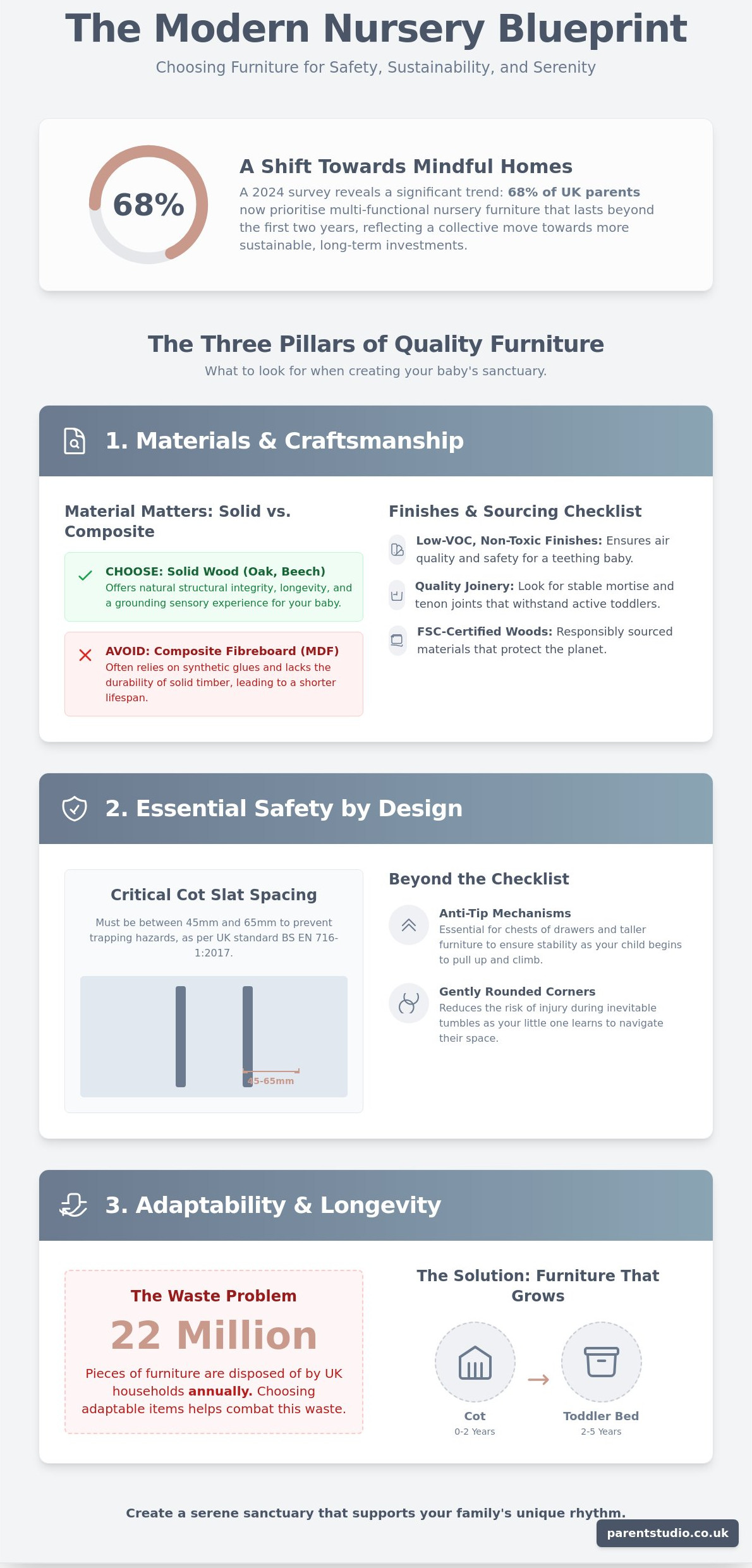
What if the most vital piece of nursery furniture isn't just a place for sleep, but a foundation for your family’s emotional well-being? It's completely natural to feel a little lost when faced with endless safety checklists and the pressure to buy everything at once. You want a space that feels like a hug, not a cluttered showroom that you'll need to replace in twelve months. A 2024 consumer survey found that 68% of UK parents now prioritise multi-functional pieces that last beyond the first two years, reflecting a collective shift towards more mindful, sustainable homes.
We know you believe that a peaceful environment is essential for a happy baby, and we're here to help you achieve that without the stress. This guide shows you how to select nursery furniture that nurtures your child’s development while creating a serene, organised sanctuary for your growing family. We will explore the latest 2026 safety standards, sustainable British materials, and clever designs that adapt beautifully as your little one grows.
Key Takeaways
- Understand how to choose sustainable, non-toxic materials that create a safe and peaceful foundation for your baby’s first room.
- Learn to select versatile nursery furniture that evolves beautifully alongside your child, from their very first nights to their early school years.
- Discover how to organise your space using responsive layout techniques that keep essentials close and maintain a sense of quiet order.
- Explore the benefits of tactile, natural finishes in fostering a deeper sense of connection and nurturing your little one’s sensory development.
- Gain the confidence to create a serene sanctuary that supports your family’s unique rhythm and promotes long-term emotional health.
Navigating the Nursery: Why Your Furniture Choices Matter for Calm and Connection
Preparing your home for a new arrival is a deeply emotional journey that goes far beyond simple interior design. You're crafting a sanctuary where your family's first memories will take root. It's completely natural to feel a sense of weight in these decisions, as you want everything to be perfect for your little one. Choosing furniture isn't just about aesthetics; it's about creating a "responsive" environment. We define responsive furniture as pieces that actively support your physical comfort and emotional well-being, allowing you to focus entirely on your baby.
When every item has a purpose and a place, the resulting lack of clutter helps lower parental stress. This sense of order is vital during the early months of 2026 when sleep deprivation makes even small tasks feel daunting. By prioritising longevity over fleeting trends, you invest in a space that nurtures your family's growth. High-quality pieces offer a sense of permanence in a time of massive transition, acting as a gentle anchor for both you and your child.
Taking the time to select items that resonate with your values can transform a simple room into a true haven of connection. This thoughtful approach ensures that your nursery remains a place of peace rather than a source of organisational frustration.
The Psychology of a Peaceful Nursery Space
The physical attributes of your room influence your baby's nervous system. Soft, rounded lines and natural textures like solid ash provide a tactile sense of security that sharp edges lack. Reducing visual noise is equally important for your mental clarity. A streamlined space with thoughtful storage helps your mind rest, which in turn helps your baby settle. In a gentle parenting context, the furniture you choose serves as a quiet foundation that supports the daily rhythms of feeding, soothing, and bonding without unnecessary friction.
Moving Beyond the "Newborn Phase" Mindset
It's easy to focus on a newborn's immediate needs, but your home deserves a sustainable approach. Data from the North London Waste Authority shows UK households dispose of 22 million furniture pieces annually. Choosing adaptable items helps combat waste while saving you money. Look for pieces that transition, such as a cot that meets infant bed safety standards before converting into a toddler bed. Timeless designs ensure your home still feels like yours as the nursery evolves into a playroom.
The Pillars of Quality: What to Look for in Sustainable Baby Furniture
You're likely feeling the weight of many decisions right now. It's completely natural to want the very best for your little one while feeling a bit overwhelmed by technical specifications. When you choose your nursery furniture, you aren't just buying items for a room; you're selecting the backdrop for your child's first years. We want to help you find pieces that offer both a sanctuary for your baby and peace of mind for you.
Materials and Craftsmanship
Choosing solid wood like beech or oak ensures your investment lasts through toddlerhood and beyond. Unlike composite fibreboard, which often relies on synthetic glues, solid timber provides natural structural integrity. High-quality joinery, such as mortise and tenon joints, allows the piece to remain stable even as your child becomes more active. These natural textures do more than look beautiful; they provide a grounding, sensory experience for your baby. Research from the Center on the Developing Child at Harvard University explains how environment shapes development, suggesting that the physical surroundings of a child can influence their long-term cognitive health. By selecting FSC-certified woods, you're also honouring the planet your child will inherit. Look for water-based, non-toxic finishes that are low in volatile organic compounds (VOCs). These finishes ensure that when your curious toddler inevitably tests the cot rails with their teeth, they aren't ingesting harmful chemicals.
Safety Features You Might Not Consider
Safety goes far deeper than a simple checklist. While every piece sold in the UK must meet the UK CA mark and BS EN 716-1:2017 standards, truly thoughtful design goes further. Anti-tip mechanisms for chests of drawers and gently rounded corners are essential for a home where a toddler is learning to find their feet. Breathability is another vital factor. Ensure cot slats are spaced between 45mm and 65mm apart to allow for maximum airflow while preventing any risk of trapping.
Your own physical well-being is just as important in this journey. A 2021 study published in the Journal of Women’s Health Physical Therapy found that 67% of women experience postpartum back pain. Adjustable base heights in a cot allow you to lift your newborn without excessive bending, protecting your spine during those frequent late-night feeds. As your baby grows and begins to sit up, you can lower the base to keep them secure. As you consider these features, you might find it helpful to browse our curated range of nursery furniture designed with these gentle principles in mind. Creating a space that supports both of you is a beautiful way to start this new chapter together.
Adapting to Growth: Comparing Multi-Functional Furniture for Every Stage
It’s natural to feel a sense of overwhelm as you watch your baby quickly outgrow their first tiny blankets and baskets. This rapid development is a beautiful part of their journey, and choosing adaptable furniture can help you feel more prepared for the milestones ahead. Instead of replacing items every few months, many families now look for pieces that serve multiple purposes. For example, a sturdy dresser that features a removable changing station allows the piece to remain useful well into your child’s teenage years. This approach isn't just practical; it creates a sense of continuity and calm in your home environment by reducing the need for constant shopping and assembly.
The Evolution of the Bed: From Cot to Toddler Bed
Moving from a moses basket to a full-sized cot usually happens between four and six months. You might choose a standard rectangular cot, typically measuring 120cm by 60cm, or an oval design that mimics a nest-like feel. Oval cots often take up less floor space, making them ideal for smaller UK nurseries. You'll likely notice your child is ready for more independence when they start attempting to climb the rails or reach a height of roughly 90cm. Using an extension kit to convert a cot into a toddler bed is a gentle way to manage this change. It keeps their familiar sleeping space intact while saving you the cost of an entirely new bed frame, which can often exceed £200 for a quality timber model.
Seating and Interaction
An ergonomic high chair is a vital tool for bringing your baby into the heart of the family. Models that follow the European safety standard EN 14988 ensure your child is secure while they learn to eat. These chairs aren't just for weaning; many designs now transition into study desks or dining chairs that support a weight of up to 100kg. This longevity ensures your child always has a seat at the table. For your own comfort, a dedicated nursing chair with proper armrests and lumbar support is essential. It protects your posture during the 2,000 to 2,500 hours you may spend feeding in the first year alone. Eventually, these chairs become a peaceful spot for shared stories, reinforcing the bond you’ve built since those early days.
- Independence: Low-level play tables allow toddlers to access activities without help, building their self-esteem through autonomous discovery.
- Longevity: Multi-functional furniture reduces the environmental impact of frequent disposals and keeps your home feeling spacious.
- Safety: Always check for the British Standards Kitemark when selecting adjustable items to ensure they meet current UK safety regulations.
Curated Essentials: Standout Pieces from the Parent Studio Collection
We understand that selecting the right items for your home can feel like a heavy responsibility when you are already tired. You want pieces that don't just fill a room but actually support your daily rhythm and the unique bond you share with your child. Our curated collection focuses on furniture that grows alongside your family, reducing the need for frequent replacements while creating a sense of calm continuity. These items are crafted from natural materials that feel grounding to the touch, such as smooth solid beechwood and soft-textured finishes that invite connection rather than clinical distance.
The Stokke Sleepi Bed V3: A Nest for Every Age
The Stokke Sleepi Bed V3 is designed with a soft, oval silhouette that mimics the comfort of a cocoon. Unlike traditional rectangular cots, its curved edges offer a gentle boundary for your newborn, helping them feel secure in a vast new world. The tactile experience is central to its design; the perforated mattress base allows for air circulation while the solid wood frame provides a sturdy, reassuring presence in the room.
Because UK homes often require flexibility, the lockable swivel wheels are a practical addition. You can glide the bed through narrow hallways or move it between rooms to keep your infant close during those early, hazy weeks. This piece is a long-term companion that evolves through four stages. It supports your child from birth until they reach approximately five years old, ensuring their sleeping environment remains a familiar, safe haven as they grow.
The Tripp Trapp and MuTable: Supporting Play and Nutrition
The Tripp Trapp chair is a remarkable example of how a single object can hold decades of family history. It is engineered to hold up to 136kg, which means it can transition from a supportive high chair to a sturdy seat for an adult. By bringing your baby to the dining table from birth, you encourage social connection and shared experiences during every meal. The adjustable seat and footplate ensure that your child is always ergonomically supported, no matter their height.
For moments of creative discovery, the MuTable offers a versatile station featuring interchangeable play boards. These boards cater to different developmental stages, such as brick building or chalkboard drawing, keeping the play area organised and focused. To complement these active zones, the Stokke Home Dresser provides a timeless storage solution. Its deep drawers and clean lines ensure it remains a functional part of your home long after the nappy-changing years have passed. We view these as heirloom pieces, intended to be passed down through generations rather than discarded after a single use.
Choosing the right furniture is about more than aesthetics; it is about creating a responsive environment where both you and your child can thrive together. If you are ready to find pieces that will grow with your family, you can explore our full range of thoughtfully designed items.
View the Parent Studio Furniture Collection
Creating Your Sanctuary: How to Organise a Responsive Space
You have chosen your pieces, and now comes the gentle process of arranging them to support your new life together. It's natural to feel a little pressure to get everything "right," but your intuition is your best guide here. A responsive space is one that prioritises your comfort and your baby's safety, allowing you to focus on the connection that matters most. By thinking about the flow of your daily rhythms, you can transform a simple room into a true sanctuary.
Practical Layout Tips
Start by placing the cot in a position that avoids draughts from windows and stays at least 1 metre away from direct heat sources like radiators. This helps you maintain the 16 to 20 degrees Celsius temperature recommended by the Lullaby Trust for safe sleep. Create a dedicated nurture nook by placing a supportive chair in a quiet corner. This becomes your sanctuary for feeding and bonding, away from the busier zones of the room. Utilising vertical storage or floating shelves keeps the floor space clear for play, which makes even smaller rooms feel open and peaceful.
The changing zone requires a thoughtful approach to keep stress at bay during those late-night transitions. Organise your essentials so that nappies, wipes, and fresh muslins are all within arm's reach. When everything has a logical home, you can keep one hand on your baby at all times, ensuring safety while maintaining a calm atmosphere. This proximity allows you to stay present in the moment rather than searching through drawers while your little one is unsettled.
Lighting plays a vital role in supporting your baby's developing circadian rhythm. Avoid harsh overhead lights during the evening. Instead, opt for dimmable lamps with warm, amber tones that don't interfere with melatonin production. Choosing a colour palette of soft, earthy neutrals like sage or stone provides a low-stimulation environment. These choices help signal to your baby’s nervous system that it is time to rest, making the transition to sleep much smoother for everyone.
Final Touches for a Gentle Home
Once the main furniture is in place, you can add layers of comfort through carefully selected textiles. Choose natural, breathable fibres like organic cotton or wool that complement your furniture and feel soft against sensitive skin. A "less is more" philosophy helps prevent sensory overload for both you and your baby. You don't need to fill every corner; leaving space for breath and movement is often the kindest thing you can do for your home. Browse our full furniture collection here to start your journey.
Please remember that there is no such thing as a "perfect" nursery. The most beautiful space is simply the one that works for your unique family. If you find a layout isn't quite right after a few weeks, give yourself the grace to change it. Your home is a living environment that will grow and evolve just as your baby does. Trust that you are creating exactly what your child needs: a place of warmth, safety, and love.
Nurturing Your Family’s Future
Preparing for your little one’s arrival is a journey of connection, not just a list of tasks. By focusing on multi-functional pieces and sustainable materials, you create a responsive sanctuary that adapts as your child grows. It’s about more than just aesthetics; it's about choosing high-quality items that support your well-being and mirror the gentle environment you're building. We know how much these choices matter for your peace of mind.
As an official Stokke partner in the UK, we've carefully curated a range of eco-friendly, opulent materials that stand the test of time. If you’re feeling a bit unsure about where to start, our expert one-to-one nursery consultations provide a supportive space to discuss your specific needs. You don't have to navigate these decisions alone. We’re here to help you feel confident and prepared for this beautiful new chapter.
Take a gentle step toward creating your ideal home environment today. We invite you to explore our exquisite assortment of baby furniture and discover pieces designed with your family’s long-term emotional health in mind. You’re doing a wonderful job, and your home will soon be the perfect place for your bond to flourish.
Frequently Asked Questions
What is the most important piece of furniture to buy for a nursery first?
A cot or Moses basket is the most essential purchase because it ensures your baby has a safe, dedicated sleep space from their first night home. While it's tempting to focus on decor, the Lullaby Trust recommends a clear, flat sleep surface for at least the first 6 months. Choosing high-quality nursery furniture early on helps you create a calm, organised environment. This focus reduces the stress of last-minute shopping as your due date approaches.
Is it worth buying a cot that converts into a toddler bed?
A cot that converts into a toddler bed is an excellent investment because it extends the life of your purchase by roughly 4 years. Most convertible models transition from a cot to a toddler bed and eventually a daybed or full-sized bed. This longevity means you won't need to replace the bed when your child reaches 2 or 3 years old. It provides a sense of familiar comfort for your little one during big transitions.
How do I know if the furniture I choose is safe for my baby?
You can verify the safety of your items by checking for the BS EN 716-1:2017 British Standard mark on all sleeping products. This certification ensures the item has passed rigorous testing for stability and structural integrity. Look for non-toxic finishes and ensure slat gaps are between 45mm and 65mm. Following these specific UK safety regulations gives you the peace of mind to focus on bonding with your baby.
What should I look for in a sustainable furniture brand?
Look for brands that use 100% FSC-certified timber and water-based, low-VOC finishes to ensure your home's air remains clean. Sustainable furniture manufacturers often provide detailed reports on their carbon footprint and supply chain ethics. In 2023, the furniture industry saw a 15% increase in brands adopting circular economy practices. Choosing these items supports a healthier planet for your child's future while providing a gentle, chemical-free space.
Can I use a dresser as a changing table to save space?
You can certainly use a sturdy dresser as a changing table by adding a secure changing mat or a removable topper. This approach saves approximately 0.5 square metres of floor space in smaller rooms. It's a practical way to simplify your nursery layout while keeping essentials within reach. Once your baby is out of nappies, the dresser remains a functional piece of storage that grows with your family.
Why is ergonomic furniture important for parents as well as babies?
Ergonomic pieces are vital because they protect your physical health during the 2,000 hours you'll likely spend feeding or soothing your baby in the first year. A chair with proper lumbar support and armrests at the correct height prevents repetitive strain. When you feel physically comfortable, you're better able to remain present and calm. Your well-being is just as important as your baby's comfort in creating a nurturing home.
How long does luxury nursery furniture typically last?
High-quality nursery items are designed to last for 10 years or more, often serving multiple children across a decade. Solid wood pieces with dovetail joints maintain their structural integrity far longer than flat-pack alternatives made from particle board. Many families find that premium pieces become cherished heirlooms. This durability makes the initial investment more cost-effective when you consider the price per year of use.
Do I need a special chair for breastfeeding or bottle feeding?
While any seat works, a dedicated nursing chair provides the specific support needed for long nights and frequent feeds. These chairs are designed with a seat height that makes standing up easy while holding a sleeping baby. About 80% of parents find that a glider or rocker helps soothe a restless infant more effectively than a standard armchair. It becomes a quiet sanctuary for connection and rest.
Latest posts

One frame from birth to toddler
Read article
Luxury Nursery Furniture London: Creating a Gentle Sanctuary for Your Baby
Read article
Car Seat Safety Laws UK: A Guide for Protective Parents in 2026
Read article